Google is launching its newest music generation model, Lyria 3.5, in Google Flow Music. The update brings significant advancements in musicality, lyrics, vocal quality, and creative control features such as tempo and duration management.
Key Takeaways
Improves melodic structures and natural sound quality.
Enhances lyrics generation with better prompt adherence and structural awareness.
Adds granular control over tempo and output duration.
# Lyria 3.5# Google Flow Music# AI Music Generation# Machine Learning
European industrial sectors face mounting pressures from geopolitical volatility, strict regulations, and the shift toward software-defined products. Decades of reliance on monolithic legacy systems, mainframes, and fragmented ERPs now hinder resilience and compliance. To overcome this technical debt, organizations must transition to AI-driven operating models and cloud-native platforms. A four-pillar approach—focusing on target operating models, enterprise platform modernization using the strangler fig pattern, data modernization via data mesh, and software engineering excellence—enables manufacturers to achieve Industry 4.0 and Industry 5.0 standards.
Key Takeaways
Automotive sectors struggle with rigid V-cycle architectures that delay software-defined vehicle features.
The strangler fig pattern and GenAI-assisted legacy refactoring help decouple mainframes efficiently.
Implementing a data mesh architecture unifies siloed data to support real-time analytics and traceability.
This article examines the operational, financial, and reputational risks associated with aging legacy systems in government and regulated industries. It highlights the dangers of losing institutional knowledge due to talent attrition and emphasizes that workforce strategy must be a core pillar of modernization. Furthermore, the text explores how structured execution and incremental delivery can help organizations transition AI ambitions into production, while advocating for procurement changes to support iterative development.
# legacy systems# modernization# government it# artificial intelligence
This article details how to configure the Headlamp Kubernetes dashboard to use Tailscale's tsidp as an OIDC identity provider. It explains the five trust relationships required for authentication, focusing on configuring the Kubernetes API server to trust the OIDC issuer and map claims to RBAC permissions.
Key Takeaways
Headlamp handles the front-end login, but the Kubernetes API server must be configured to validate tokens from the OIDC issuer.
Five trust relationships must be established between the browser, Headlamp, tsidp, and the Kubernetes API server.
Kubernetes RBAC can then map token claims, such as email and tags, into subjects and roles like cluster-admin.
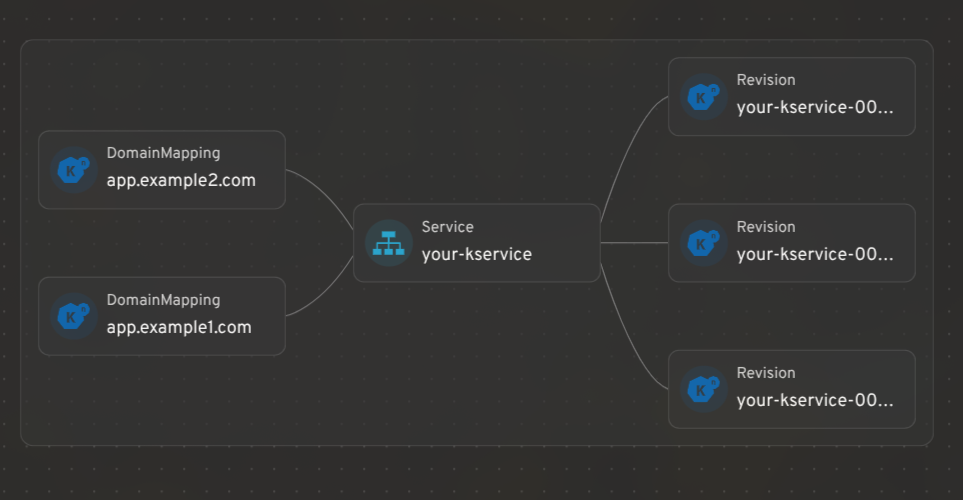
Headlamp has introduced a new open-source plugin for Knative developed through an LFX mentorship program. The plugin bridges the operational gap of managing serverless workloads by unifying KServices, Revisions, DomainMappings, and networking overview into a single interface. Operators can inspect resource relationships through Headlamp's map view, perform live edits on traffic splits and autoscaling annotations, view Prometheus metrics, and manage cluster resources without switching between the kn CLI, kubectl, and standard Kubernetes UI.
Key Takeaways
Integrates Knative CRDs into Headlamp's graphical resource map view.
Supports live traffic splitting adjustments and validation for canary and A/B testing.
Combines with the Prometheus plugin to display request rates, latency, and resource utilization.
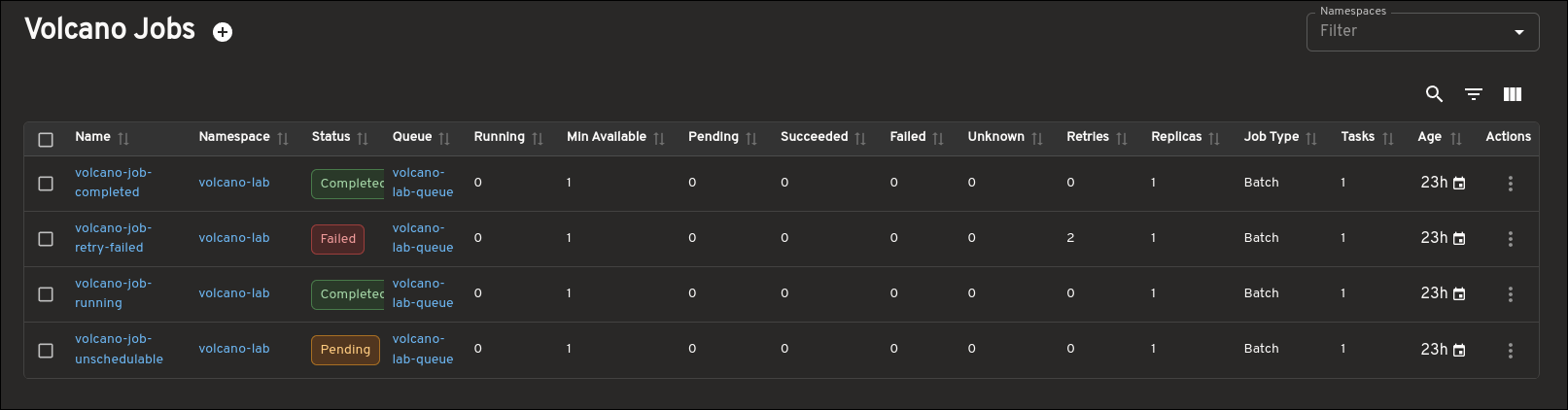
The Volcano plugin for Headlamp brings Volcano's batch scheduling resources, such as Jobs, Queues, and PodGroups, directly into the Headlamp Kubernetes web UI. It provides dedicated list and detail views, lifecycle actions like Suspend and Resume, direct log access, and a visual map view to help teams troubleshoot AI/ML, HPC, and batch workloads more efficiently without relying solely on CLI tools.
Key Takeaways
The Volcano plugin surfaces custom resources such as Jobs, Queues, and PodGroups in a dedicated sidebar section within Headlamp.
Features include direct log access for single or multiple pods, and lifecycle management actions like Suspend and Resume.
A built-in map view visually connects Jobs, PodGroups, Queues, and Pods to quickly identify blockers and pending workload states.
AI models can be deprecated, banned, or experience sudden pricing changes overnight due to national security regulations, vendor pivots, or market velocity. Engineering teams must avoid single-provider dependencies by building model-agnostic infrastructure. By keeping tools, memory, data layers, prompts, and routing outside the specific model and utilizing abstraction layers, open-source models, and task-specific evaluations, organizations can maintain flexibility and digital autonomy.
Key Takeaways
Treat AI models as temporary accelerators rather than permanent infrastructure foundations.
Isolate core application logic from the AI model by keeping permissions, data layers, and routing in an independent harness.
Incorporate open-source models and abstraction layers to easily swap providers and navigate pricing shifts or government restrictions.
This article explores modernizing a legacy web application built on old dependencies like React 15 and Less using the GitHub Copilot app. It highlights the use of agentic engineering, Plan mode, and managing complex tasks through stacked sessions and stacked pull requests to break down scope creep and organize sequential code updates.
Key Takeaways
The author successfully updated a legacy personal app containing outdated dependencies like React 15 and older libraries using GitHub Copilot.
Stacked sessions enable sequential tasks in the same repository where each session builds off the context of the previous one.
Stacked pull requests form an ordered chain where each pull request targets the branch of the pull request below it, landing sequentially back to main.
Thoughtworks shares insights from delivering 20 Proofs of Concept across 16 clients in 2025, noting that while AIOps has moved past pure concept, it has not yet industrialized. Key findings show that the highest value lies in knowledge retrieval and incident analysis rather than autonomous action, agent communication protocols remain immature, and operations are shifting toward hybrid deterministic-probabilistic systems.
Key Takeaways
The POC-to-production gap is driven by missing AI governance, unstructured operational knowledge, and the need for continuous tuning.
High-value use cases focus on knowledge tasks like detecting duplicate incidents, retrieving operational knowledge, and assisting with root-cause analysis, reducing L1/L2 ticket volume by 35-40%.
Agent communication protocols like MCP remain immature for mission-critical systems due to context growth and high orchestration entropy.
This guide explains how to build, test, and share custom AMD ROCm-compatible kernels using Hugging Face's kernels library and kernel-builder. It focuses on taking a high-performance, award-winning FP8 block-wise GEMM kernel optimized for AMD Instinct MI300X GPUs and wrapping it into a native PyTorch extension. By utilizing Nix for reproducible builds, developers can configure manifests, handle HIP source files, compile custom operators, and publish them directly to the Hugging Face Hub for seamless community access.
Key Takeaways
The example project utilizes an FP8 block-wise GEMM kernel optimized for the AMD Instinct MI300X GPU, employing the e4m3fnuz floating-point format with per-block scaling.
Project configuration relies on a build.toml manifest, a flake.nix file for reproducible environments via Nix, and C++ or HIP source file naming conventions.
Kernels are registered as native PyTorch operators using torch_binding files and can be built across multiple versions before being shared on the Hugging Face Hub.
The Kubernetes community is adapting to the surge of AI-generated contributions by establishing clear policies and integrating automated review tools. While AI accelerates code generation, maintainers face challenges with review bottlenecks and code quality. Kubernetes introduced an AI policy focusing on transparency, strict human accountability, CLA enforcement, and required human engagement during code reviews. Additionally, projects are experimenting with AI review tools like GitHub Copilot and CodeRabbit to act as quality gates and reduce maintainer burnout.
Key Takeaways
Contributors must disclose AI usage in pull requests but humans remain fully responsible for the changes.
AI cannot be listed as a co-author on commits due to CLA enforcement and accountability requirements.
Tools like GitHub Copilot and CodeRabbit are being evaluated and deployed to help automate initial code reviews.
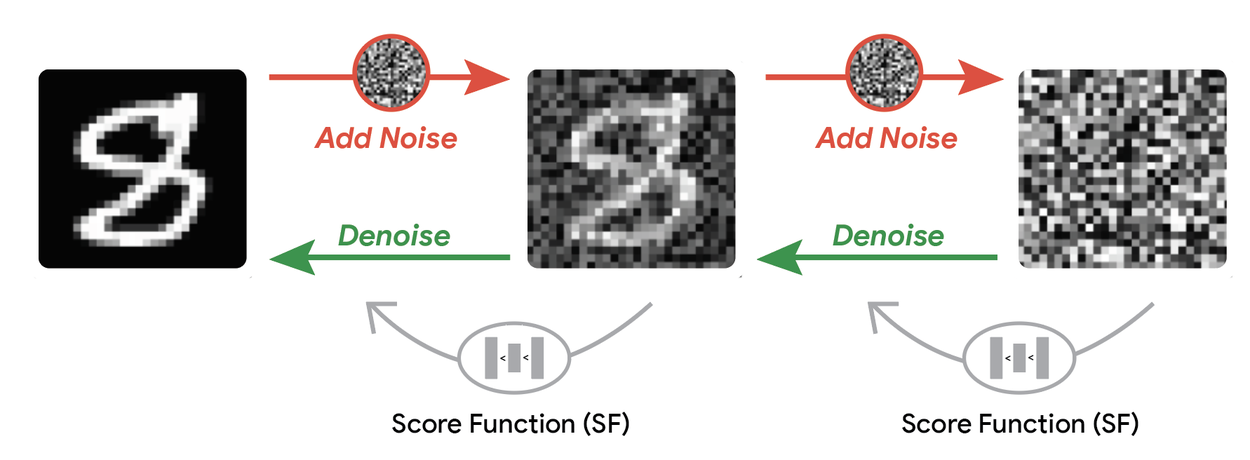
Diffusion models excel at generative tasks by generalizing beyond training data to produce novel, high-quality outputs rather than merely memorizing inputs. A study presented at ICLR 2026 demonstrates that this "creativity" stems from score smoothing—an effect caused by explicit and implicit neural network regularization during training. By softening the steep slopes of the ideal score function, score smoothing causes generated data to interpolate between training points. In multi-dimensional spaces, this effect operates directionally: it slows down particle convergence tangentially along the data manifold to encourage novelty while preserving rapid convergence toward the manifold to maintain high image quality.
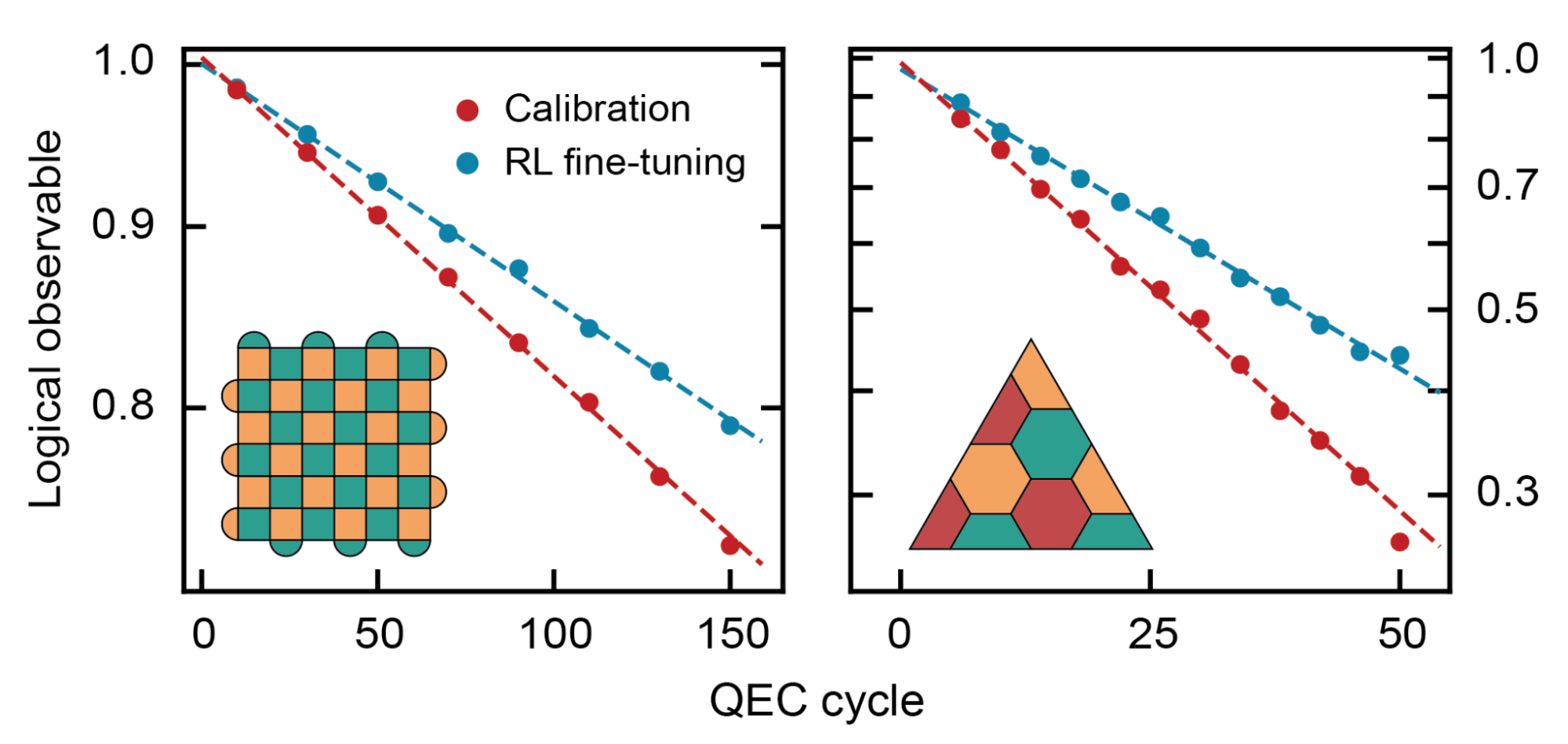
Google Research introduces a reinforcement learning framework that continuously steers thousands of control parameters in a quantum computer to stabilize it against hardware drift without interrupting computation. By utilizing quantum error correction detection events as an active learning signal, the autonomous agent tunes the system while it runs. Tested on the Willow superconducting processor, this RL control approach improved logical stability 3.5-fold against injected drift, suppressed logical error rates further by 20% after expert calibration, and demonstrated scalability in simulations.
Key Takeaways
Combines reinforcement learning with quantum error correction detection data to actively counteract hardware drift.
Achieved a 3.5-fold improvement in logical stability and an additional 20% error rate reduction on the Willow superconducting processor.
Simulations show that required RL training iterations remain independent of system size, indicating strong scalability.
This collection of architecture articles from AWS covers a range of hybrid networking, migration, and infrastructure resilience topics. Highlights include how DeepL maintains closest-exit routing during maintenance using AWS Cloud WAN, designing hybrid AI/ML data access strategies with Amazon SageMaker, and managing infrastructure layer resiliency and failover patterns. Additional topics explore data warehouse consolidation, AWS Application Migration Service replication bottlenecks, hybrid Active Directory setups, the strangler pattern for legacy migrations, and reducing costs with Amazon VPC Endpoints.
Key Takeaways
DeepL uses AWS Cloud WAN and AS_PATH prepending to drain Direct Connect links without packet loss.
Hybrid Active Directory and Okta integrations help enterprises maintain compliance and legacy application support.
Amazon VPC endpoints improve security and reduce data transfer costs.
AI tools significantly amplify existing organizational practices, increasing team throughput while exposing underlying dysfunctions. Successful adoption requires robust ownership, tight feedback loops, automated context generation, and closed-loop production observability rather than monitoring internal agent mechanics. Organizations must maintain structural discipline, guard against cheap spot-fixes, and evolve platform engineering to maintain agent substrates like CLAUDE.md files and MCP servers.
Key Takeaways
AI throughput scales existing organizational behaviors, making dysfunctional orgs worse and high-autonomy teams faster.
Ownership and accountability remain with human engineers even when code is written by AI tools.
Closed-loop observability focuses on production outcomes and user impact, not internal agent metrics or token counts.
# ai first# observability# platform engineering# developer productivity
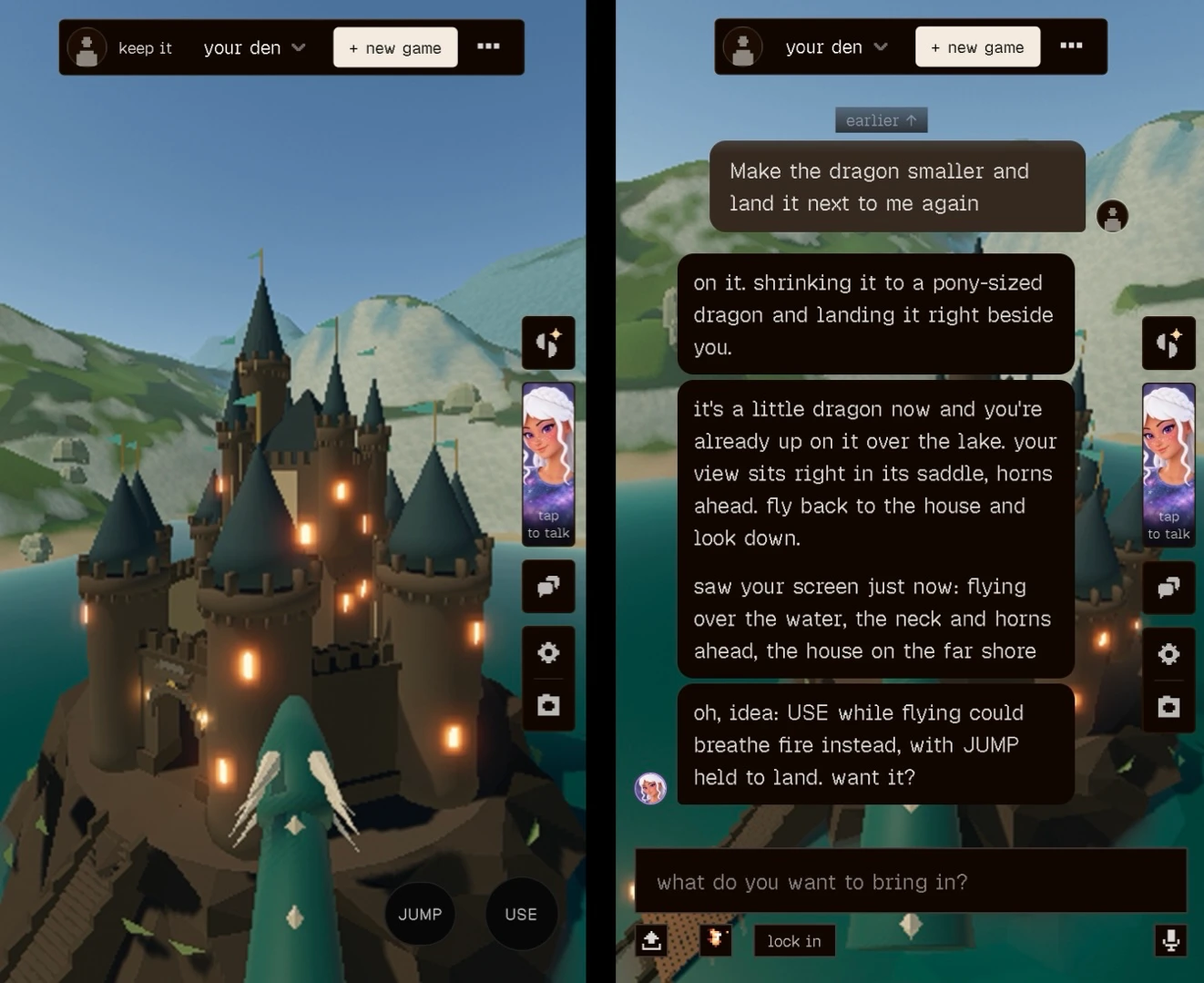
An exploration of Spawn, a massively multiplayer gaming environment where players use prompts to modify the game world. The project is developed autonomously by a swarm of Fable-powered agents that ship code to production hourly, handle bug reports, and manage continuous deployment loops.
Key Takeaways
Spawn uses in-game agents named Savi that allow players to modify the game world using prompts.
The development team spends significantly more on AI tokens than payroll, utilizing a swarm of Fable-powered agents.
Agents directly change live code and ship to production hourly, treating an hour without a deployment as a severe incident.
# agentic engineering# continuous deployment# ai models# game development
Holo4 is a new series of agentic models available in 27B dense and 35B-A3B Mixture of Experts sizes, alongside Holotron4 Nano. Built on a Qwen base and trained using supervised and reinforcement learning on environments generated by an Agentic Task Factory, Holo4 interacts through GUIs, code sandboxes, MCP, and business APIs. It achieves competitive performance on long workflows like OSWorld 2.0 at a fraction of the cost of frontier models.
Key Takeaways
Available in 27B dense, 35B-A3B MoE, and Holotron4 Nano sizes on the H Models API and Hugging Face.
Trained on roughly 10,000 tasks built by the Agentic Task Factory.
Scores 61.7% on OSWorld 2.0 with significantly fewer parameters than closed alternatives.
The Open TTS Leaderboard addresses the lack of scalable evaluation for open-source and multilingual text-to-speech models. Traditional human-preference arenas cannot keep pace with thousands of model releases. This leaderboard utilizes objective metrics such as Word Error Rate (WER) and Character Error Rate (CER) via Qwen3 ASR for intelligibility, inverse real-time factor (RTFx) and time-to-first-audio (TTFA) for speed, and WavLM speaker similarity (SIM) for voice cloning. It also features a listening tab for community feedback and streaming performance metrics on H200 GPUs and CPUs.
Key Takeaways
Evaluates intelligibility using Qwen3 ASR to compute WER and CER.
Measures speed via RTFx for batched offline inference and TTFA for streaming latency on H200 GPUs and CPUs.
This article explores how artificial intelligence is transforming software delivery, arguing that traditional multi-year planning cycles are obsolete. It introduces the 3/3/3 framework—three days to shape a move, three weeks for a prototype, and three months for a minimum lovable product—designed to reduce uncertainty and maintain engineering rigor. Through a discussion with Martin Fowler and insights on the AI/works platform, the piece highlights how structured approaches and coding agents can accelerate legacy modernization without sacrificing quality.
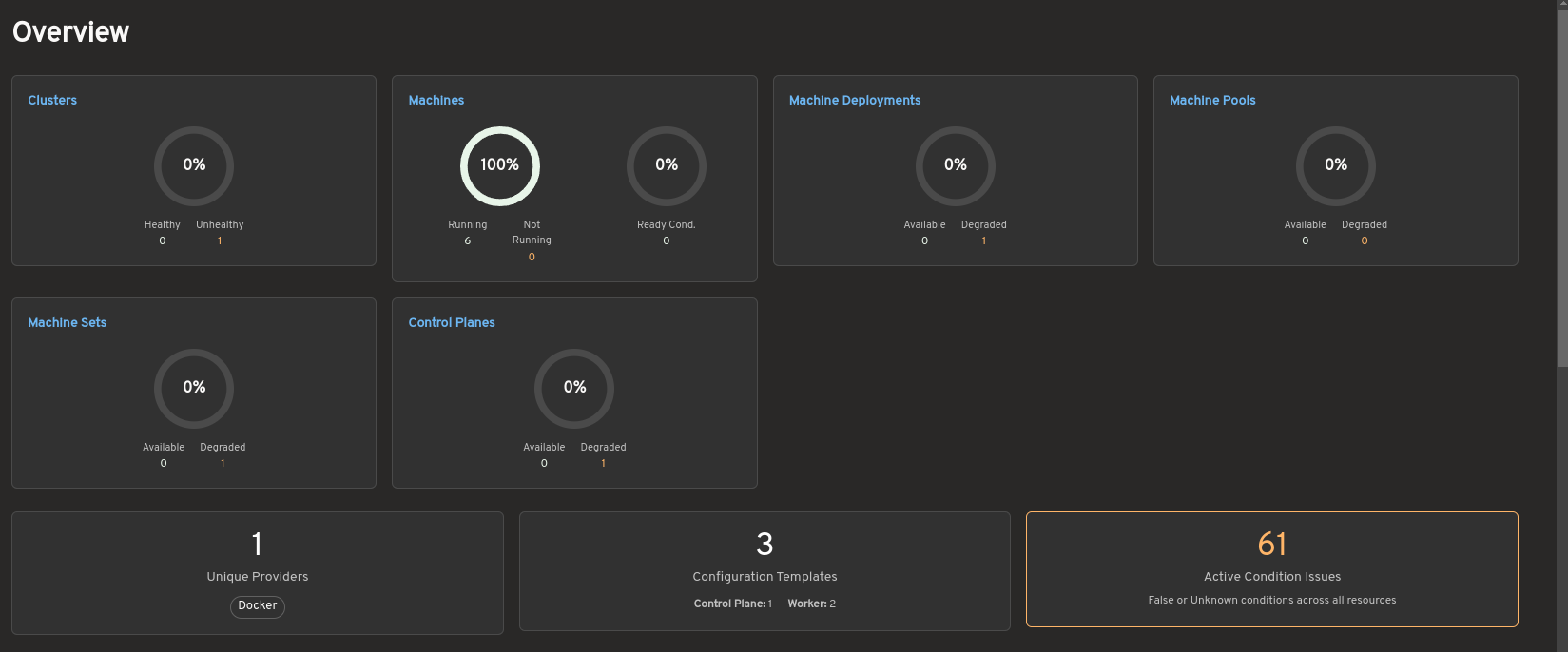
The Cluster API plugin for Headlamp brings visual clarity, faster debugging, and simplified operations for Cluster API resources directly inside the Headlamp UI. Developed during the CNCF LFX Mentorship program, this Alpha release offers dashboards, cluster list and detail views, resource maps, scaling capabilities, structured bootstrap configuration inspection, and Prometheus metrics integration.
Key Takeaways
Provides centralized dashboards and detailed health views for clusters, machines, and machine deployments.
Includes visual map views to inspect ownership hierarchies and relationships without manual YAML parsing.
Integrates with the Headlamp Prometheus plugin to display live performance metrics directly on resource detail pages.