
Scaling Radar: Fighting fraud with agent-assisted machine learning
1 similar post
- Stripe Radar
- Shield
- PyTorch
- Shepherd
- Agentic MLE
AI Summary
Stripe details the evolution of its 'Shield' fraud detection model, focusing on scaling training infrastructure to handle 11 billion transactions and integrating AI agents to automate the machine learning experiment lifecycle.
Key Takeaways
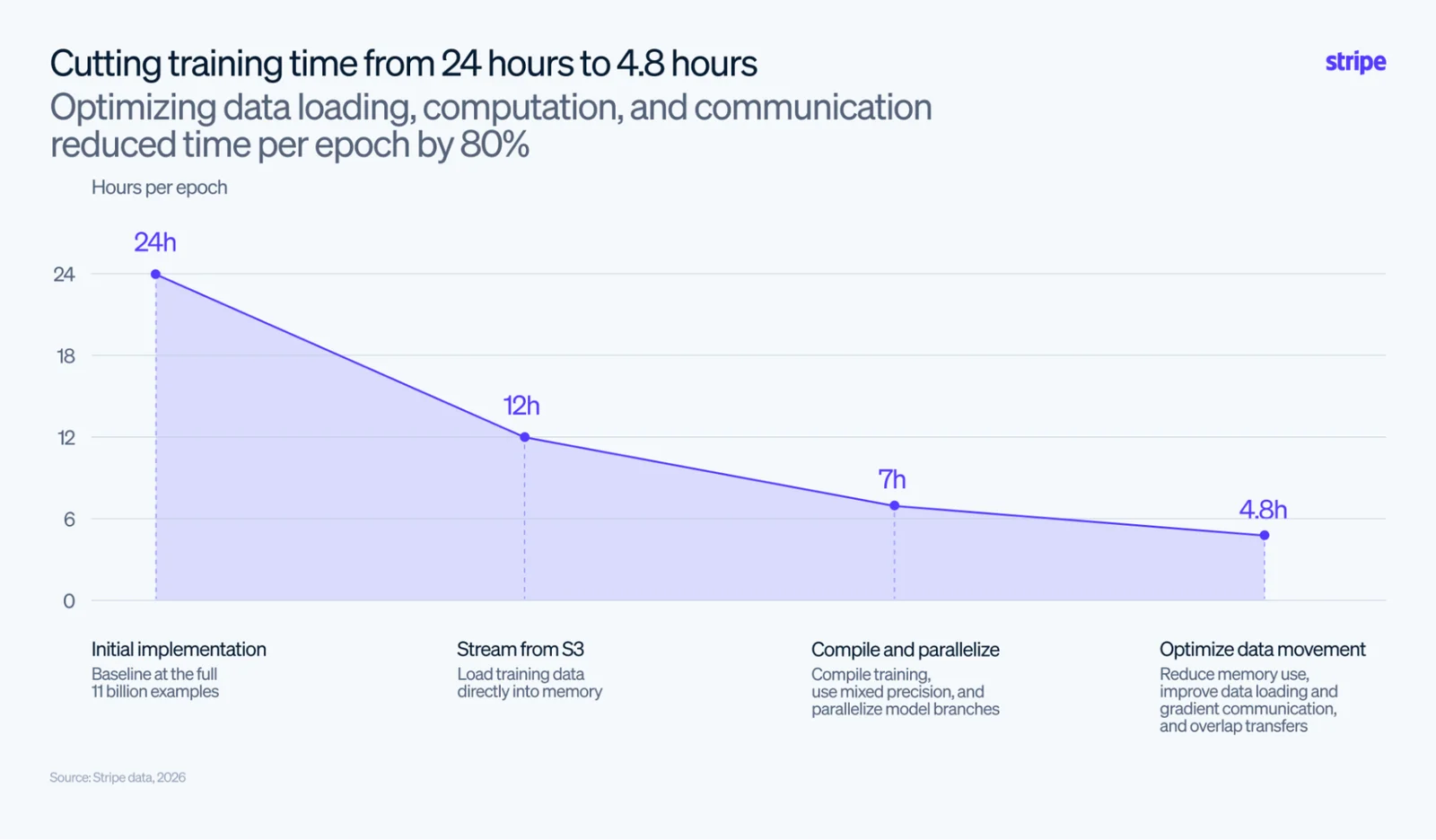
- The team optimized training throughput by streaming data from S3, using torch.compile, and reducing memory overhead to cut epoch times from 24 hours to 4.8 hours.
- Scaling the training set revealed a critical issue: including more data introduced 'immature labels' (unreported fraud), which degraded model performance until the team adjusted their sampling strategy.
- The 'Agentic MLE' framework allows AI agents to perform repetitive tasks like feature engineering, job debugging, and experiment evaluation, significantly accelerating the iteration cycle for human engineers.
Why it matters
This article provides a rare look at the practical challenges of scaling deep learning models for real-time fraud detection, specifically addressing the trade-offs between dataset size, training latency, and the impact of delayed ground-truth labels.

Conversation0
What would you add from your experience?
Checking your session…
Every good conversation starts with one perspective.