
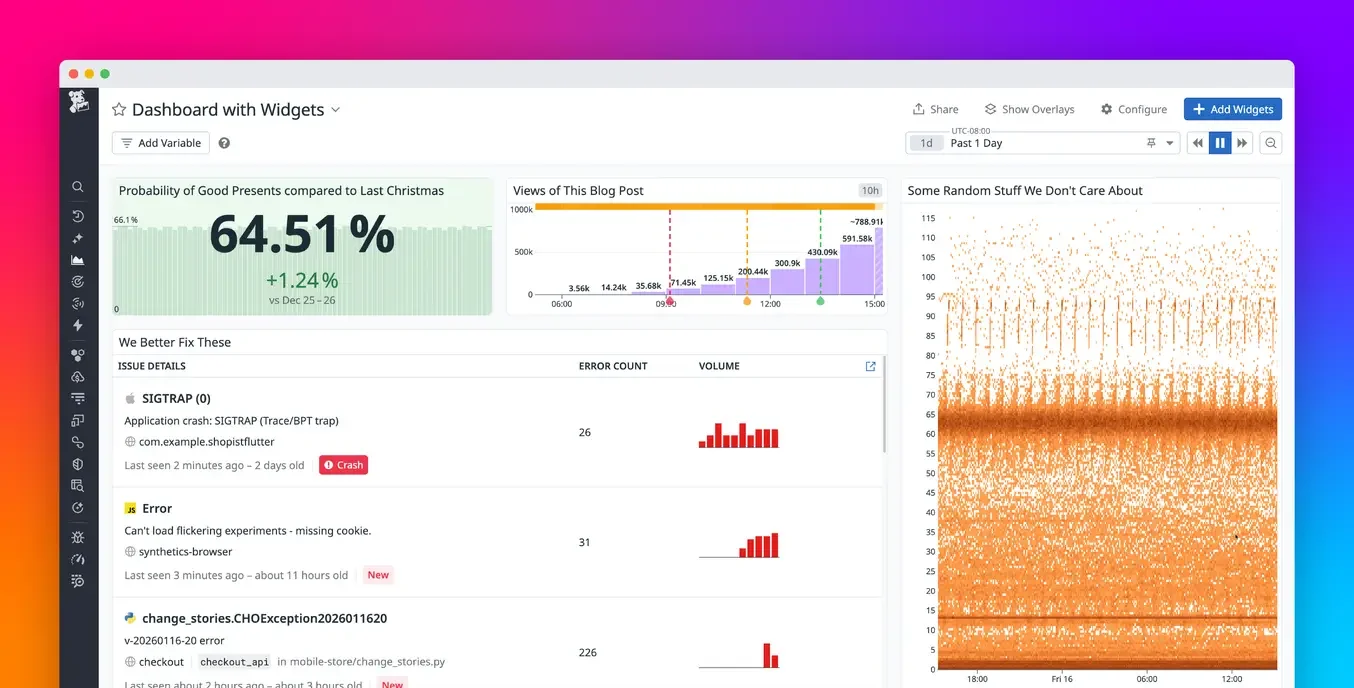
Steganography at Scale: Embedding Share URLs in Datadog Widget Screenshots
- Datadog
- Redis
- Slack
- Teams
- Chrome DevTools
AI Summary
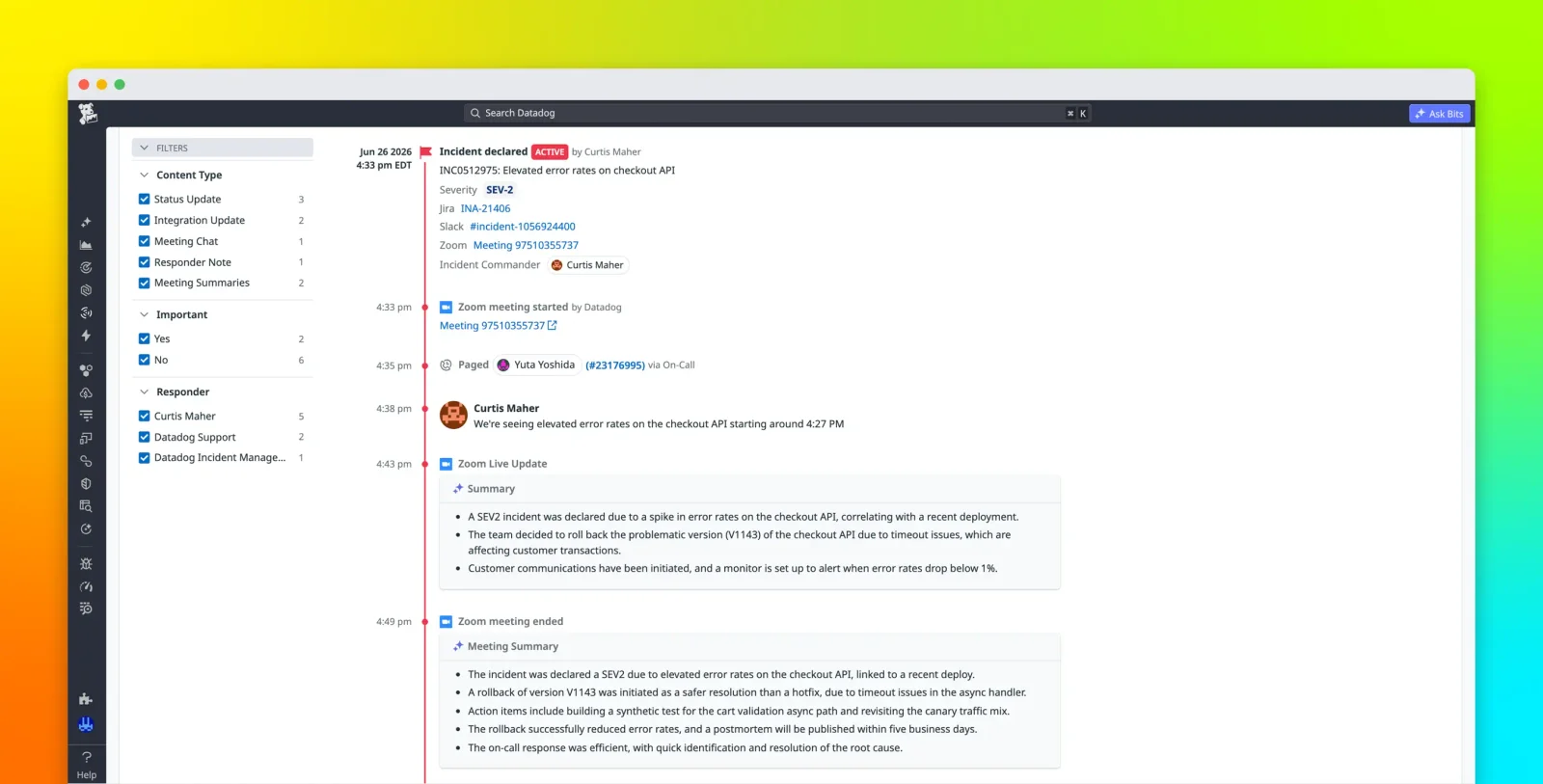
Datadog engineers explored how to embed widget metadata and share URLs invisibly into dashboard screenshots using a pixel-level encoding scheme. Instead of encoding multi-kilobyte widget definitions directly, they store definitions in a Redis cache using an organization-prefixed key, and encode only the short key as a pixel watermark. The team designed a resilient fuzzy encoding method across RGB channels to survive color profiles, display densities, and copy-paste transformations, scaling to over a billion watermarks per day without impacting app performance.
Key Takeaways
- Widget definitions average 2 kB, which is too large for direct image steganography, so they are stored in a Redis cache against an organization-prefixed random key.
- A fuzzy color encoding approach handles color gamut changes by interpreting specific offset ranges for bits 1 and 0 while utilizing a sentinel pixel layout.
- Handling high-density screens is achieved by setting watermark heights relative to the window devicePixelRatio (e.g., 0.5 pixels in Chrome DevTools).
Why it matters
This article demonstrates practical, large-scale systems engineering for applying steganography to web interfaces. It addresses real-world constraints such as color gamut remapping, device pixel ratios (DPR), caching architectures, and frontend performance at a scale of billions of requests.


Conversation0
What would you add from your experience?
Checking your session…
Every good conversation starts with one perspective.