
Connecting to Production: The Architecture of Remote Bindings
9 similar posts
- Cloudflare Workers
- Wrangler
- Miniflare
- R2
- D1
- Workers AI
AI Summary
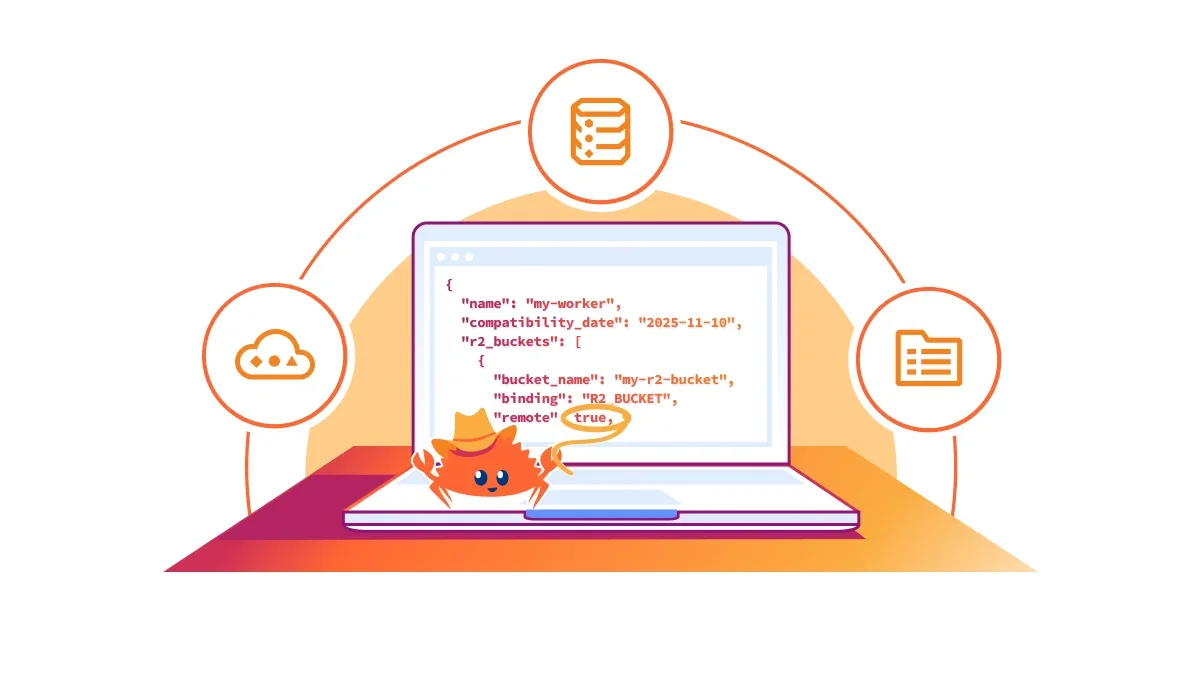
Cloudflare's remote bindings allow developers to execute Worker code locally while seamlessly connecting to deployed production resources such as R2 buckets and D1 databases on a per-binding basis. By configuring `remote: true` in Wrangler v4.37.0, local runtimes like Miniflare and workerd bypass local simulation and route specific bindings directly to remote proxy servers using HTTP and JSRPC over WebSockets, solving the complexity of full remote preview modes.
Key Takeaways
- Explains how Wrangler v4.37.0 enables granular selection between local simulations and remote production resources.
- Details the use of existing OAuth authentication without complex credential management.
- Covers the underlying mechanism using service bindings, HTTP calls, and JSRPC via Cap'n Web.
Why it matters
Understanding the architecture of remote bindings helps engineers design hybrid local-cloud development environments that bridge the gap between isolated mocks and full deployment overhead, improving iteration speed and data fidelity.


Conversation0
What would you add from your experience?
Checking your session…
Every good conversation starts with one perspective.