
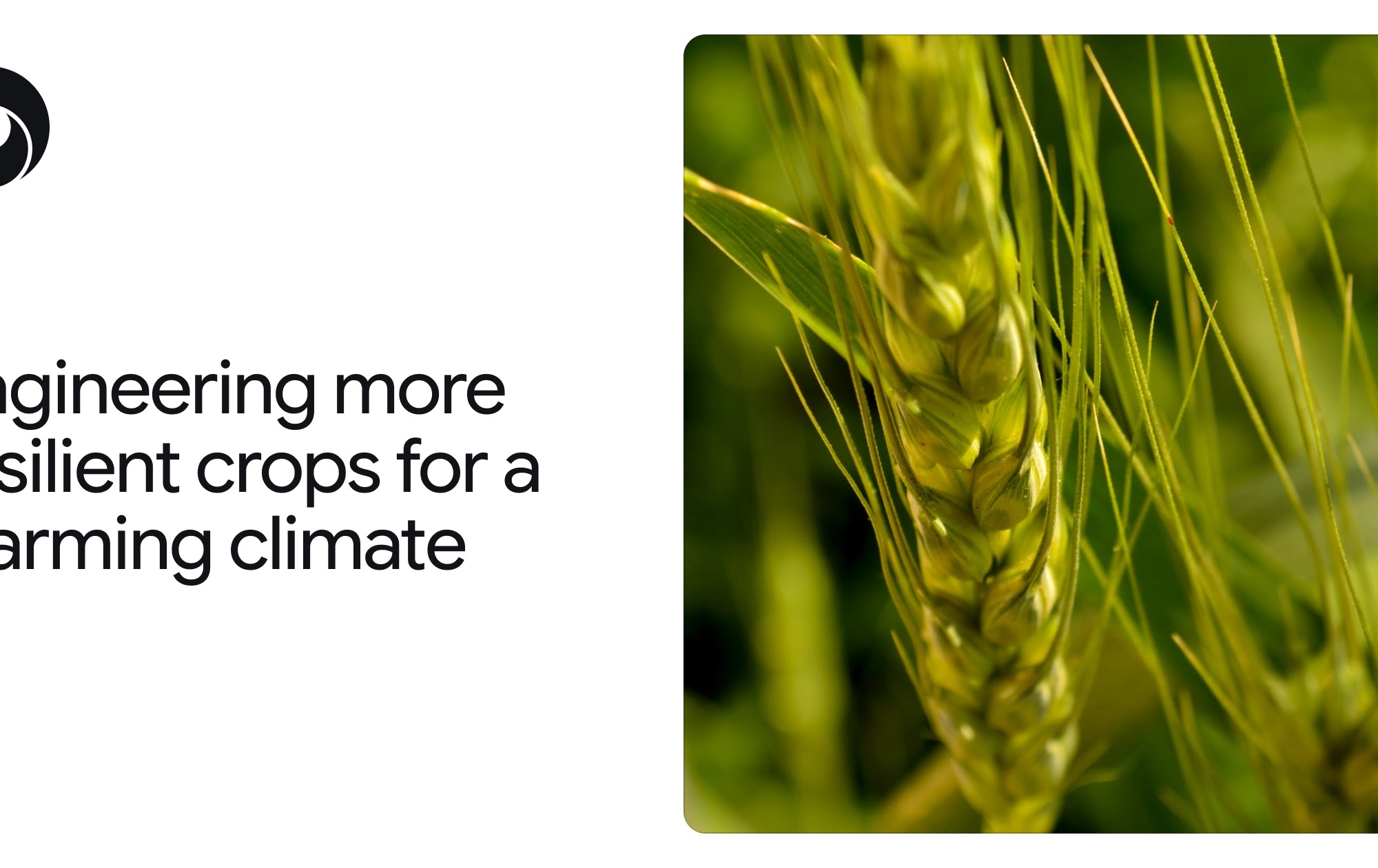
Engineering more resilient crops for a warming climate
AI Summary
Scientists are using AlphaFold to redesign an essential photosynthetic enzyme, glycerate kinase (GLYK), to withstand higher temperatures. By comparing plant GLYK structures with those of heat-loving algae using AlphaFold and molecular simulations, researchers identified unstable loops that fail under heat. Replacing these loops with rigid algae-derived variants created a hybrid enzyme stable up to 65 °C, paving the way for climate-resilient crops.
Key Takeaways
- AlphaFold was used to predict the 3D structure of glycerate kinase (GLYK), which had never been determined experimentally.
- Researchers compared plant GLYK with GLYK from heat-loving algae found in volcanic hot springs.
- Hybrid enzymes featuring rigid algal loops remained stable at temperatures up to 65 °C.
Why it matters
This research demonstrates how AI structural biology tools like AlphaFold can solve critical real-world biological bottlenecks, enabling the design of crops capable of surviving severe climate change.
Conversation 0
Be the first to share your perspective.