
Towards a quantum computer that learns from its errors
AI Summary
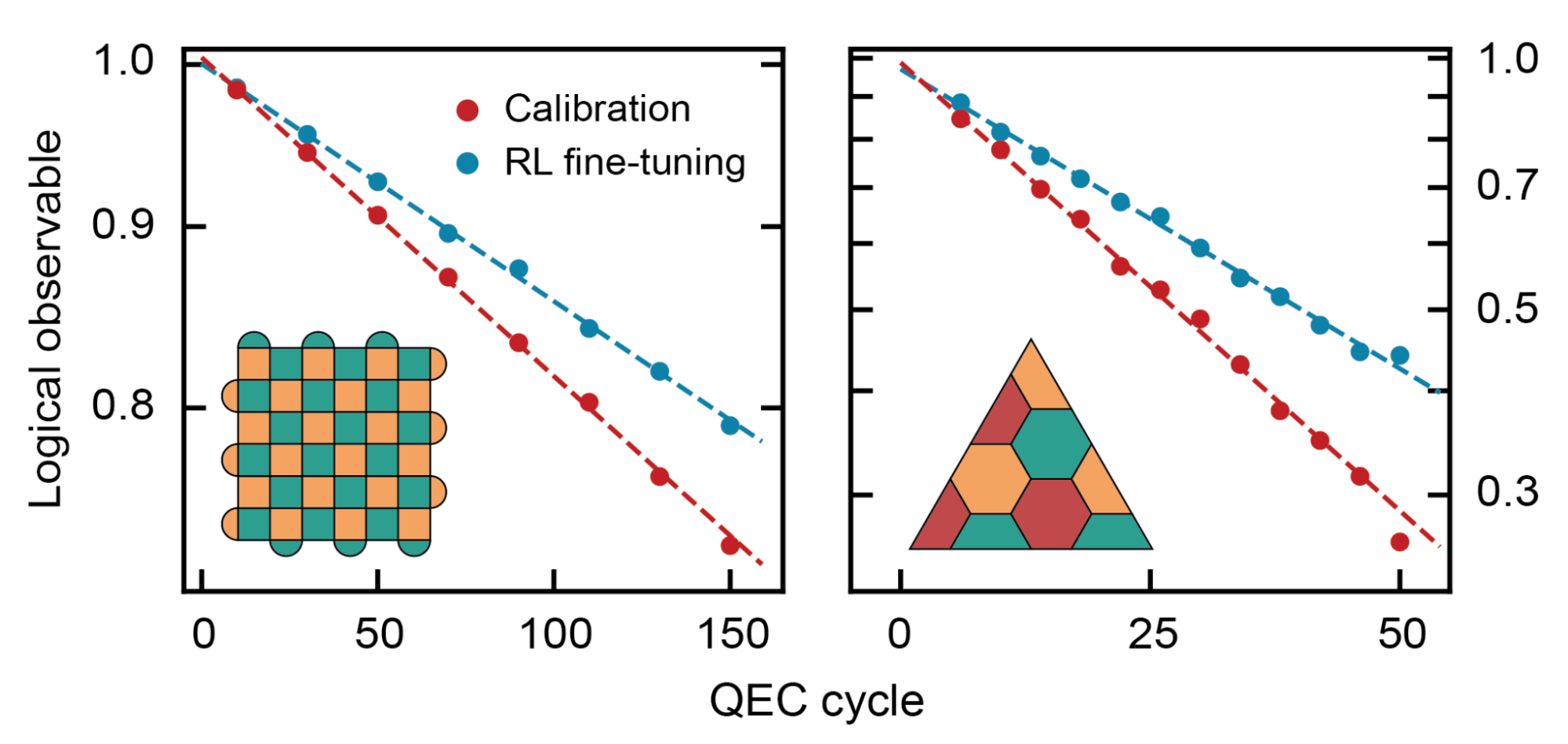
Google Research introduces a reinforcement learning framework that continuously steers thousands of control parameters in a quantum computer to stabilize it against hardware drift without interrupting computation. By utilizing quantum error correction detection events as an active learning signal, the autonomous agent tunes the system while it runs. Tested on the Willow superconducting processor, this RL control approach improved logical stability 3.5-fold against injected drift, suppressed logical error rates further by 20% after expert calibration, and demonstrated scalability in simulations.
Key Takeaways
- Combines reinforcement learning with quantum error correction detection data to actively counteract hardware drift.
- Achieved a 3.5-fold improvement in logical stability and an additional 20% error rate reduction on the Willow superconducting processor.
- Simulations show that required RL training iterations remain independent of system size, indicating strong scalability.
Why it matters
Operating quantum computers currently requires halting computations to recalibrate control parameters due to analog signal drift. This reinforcement learning methodology allows continuous tuning during execution, solving a core bottleneck for scaling quantum algorithms that need to run uninterrupted for days or months.
Conversation 0
Be the first to share your perspective.