
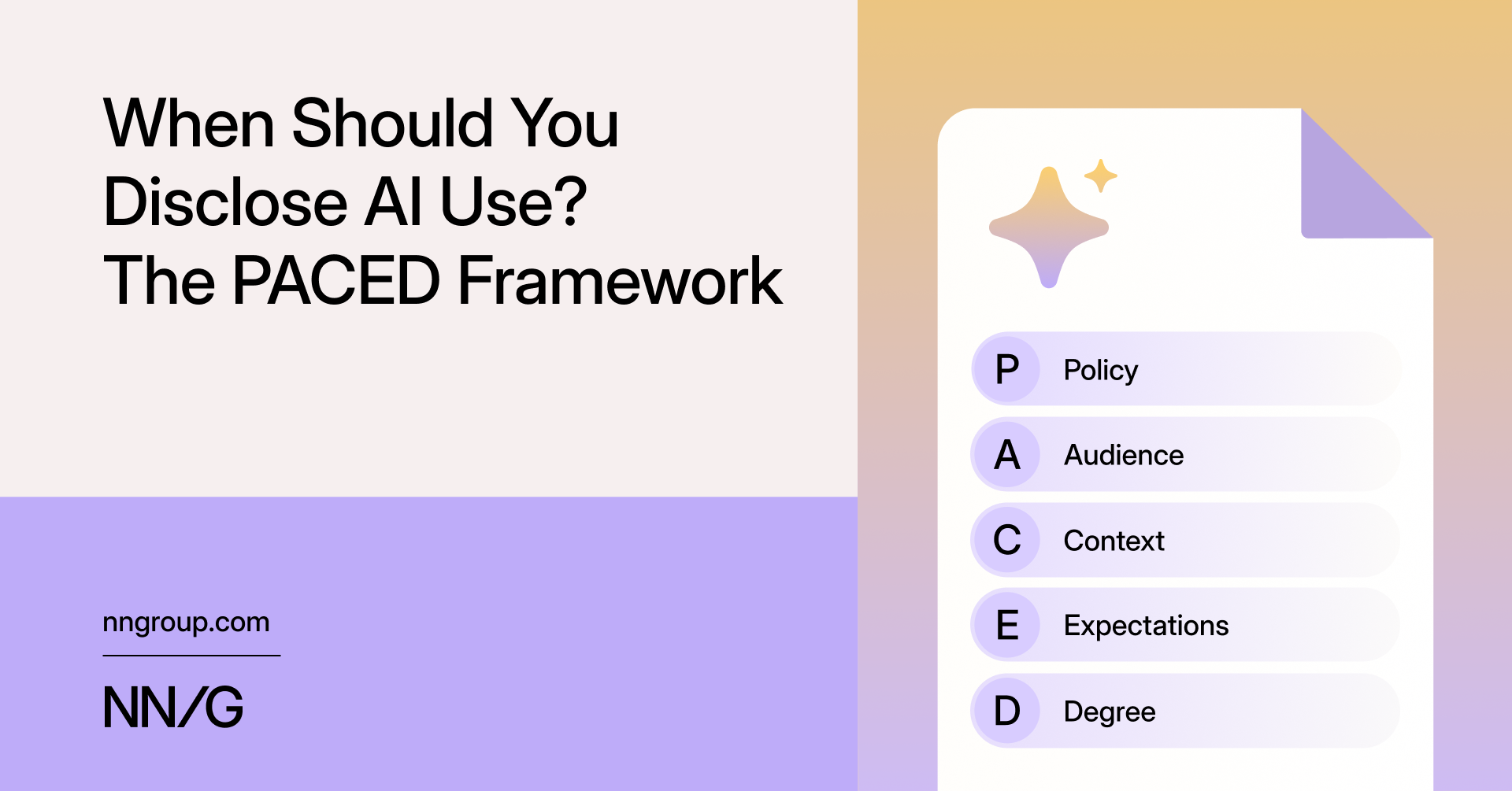
When Should You Disclose AI Use? The PACED Framework
AI Summary
This article examines how audiences react to AI content disclosures and introduces the PACED framework to help organizations decide when and how to reveal AI involvement in text and media creation. Research shows that disclosure impacts do not follow a single universal rule; instead, reactions vary based on audience attitudes, the extent of AI participation, and the specific context of the communication. The PACED framework helps guide strategy by considering policy, context, and user expectations.
Key Takeaways
- AI disclosures are human-readable statements detailing AI involvement, differing from machine-readable provenance watermarks.
- Research shows that disclosures do not universally produce negative reactions, with effects depending heavily on the domain and application.
- The PACED framework evaluates Policy, Context, and Expectations to help teams determine the right transparency strategy.
Why it matters
As regulatory mandates such as the EU AI law introduce strict transparency requirements, software and content teams must balance regulatory compliance against potential drops in trust and authenticity. Understanding the psychological impact of AI disclosure prevents missteps in brand perception and user engagement.
Conversation 0
Be the first to share your perspective.